Plauener Spitze (“Plauen Lace”), a Dzintars and Florena collaboration, 1970s–1980s (Perfumes 05)
Plauener Spitze (“Plauen Lace”) is an iconic floral-oriental fragrance made by the German cosmetics brand Florena (East Germany), often in close cooperation with the Latvian factory Dzintars, in the 1970s–1980s. The fragrance name refers to the world-famous, refined textile lace made in Plauen, Saxony.
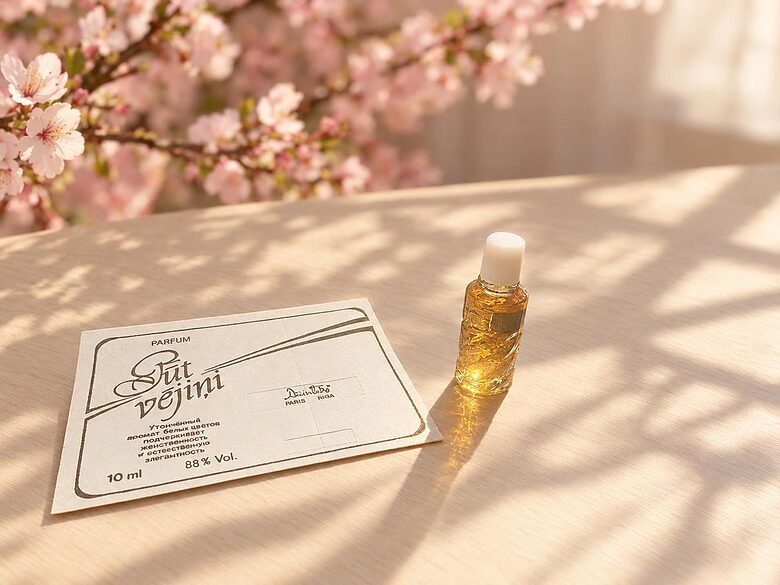
The bottle contains approximately three quarters of its original volume, estimated at approximately 6–6.5–3 ml out of 8 ml. The liquid is clean, clear and amber-coloured, with no sediment. A minimal amount of flakes is visible in the liquid. The fragrance has no signs of broken notes and is well preserved. The label and cap show visible signs of wear, but the cap is undamaged and functions properly.
The history of “Plauener Spitze” is closely connected with the period of socialist cooperation between the GDR and the USSR, represented by the Latvian SSR, in the 1970s and 1980s. The fragrance was conceived as a symbol of European style and refinement.
Textile origins and concept
The idea was to celebrate Plauener Spitze lace, a unique traditional craft from the Saxon town of Plauen. For centuries, this lace had been a source of pride in German textile production. To convey the elegance, lightness and high value of lace through perfumery, the GDR cosmetics giant Florena decided to launch a perfume brand of the same name.
Cooperation between Florena and Dzintars
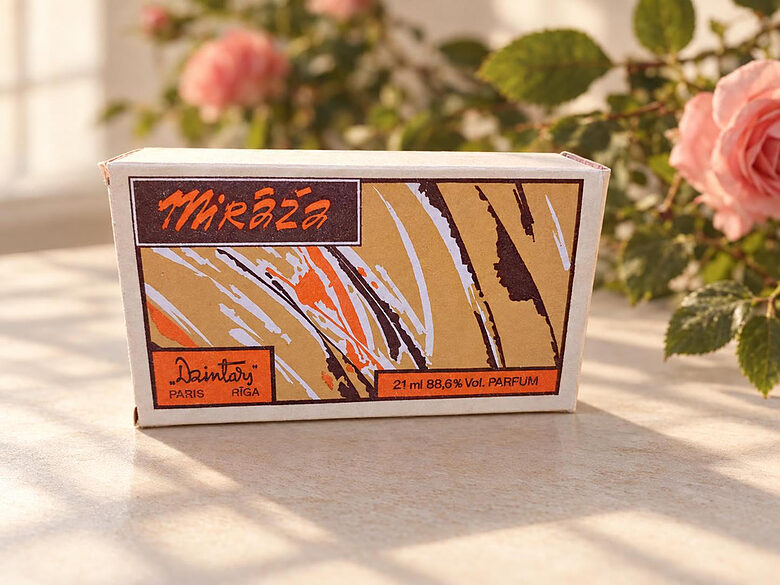
To create a complex, rich oriental-floral formula and distribute it across the vast Soviet market, the German manufacturers enlisted perfumers from Dzintars, the leading company in the Baltic region. At the time, the Riga factory was proud of its state-of-the-art European equipment and world-class laboratories. The result of this alliance was a fragrance combining German quality standards with the charm of Baltic perfumery. The perfume was produced in several design variations, with different cap and label shapes, both directly in the GDR and at the Dzintars factory.
The fragrance is created in a classic old-school style. It is complex, rich and dense, yet remarkably quiet in its projection. It lacks modern lightness or “clean” freshness; instead, it is a rich, enveloping powdery-honey composition with a noticeable balsamic undertone.
Official note pyramid
- Top notes: a bright citrus bergamot accord softened by warm rose and tonka bean notes.
- Heart notes: a luxurious, slightly tart jasmine, sweet woody lily of the valley and a delicate woody violet bouquet.
- Base notes: deep, noble woody notes with creamy sandalwood and thick, sensual amber.